Friday, September 5, 2008

Monday, December 17, 2007


Wednesday, November 28, 2007
Blogging from a pearl is problematic
Tuesday, November 27, 2007
Scan the Outliers
One guess might be heightened activity in the motivational and motor sensors, as Dr. Farmer imagines taking the necessary actions to solve the problem. We might also expect to see higher activation in those regions associated with outrage.
Farmer credits his family upbringing with his instinctive imperative to help those less fortunate. Might his activation pattern to this stimulus have remained relatively constant since maturity over time? If so, then perhaps activation patterns on a given stimuli could predict life long dedication to philanthropy.
The application for this research might tend towards a behavioral treatment, for there is no doubt that behavioral conditioning influences brain patterns [to suggest as much is nearly a tautology], focused on particular goals of economic equity or distribution. Of course, related pharmaceutical testment hovers ominously nearby. However, the behavioral treatment is no different from moral education or advertising, and a drug treatment no different than valium or adderal.
Let the proposed applications not distract from the question: what is different about the brains of those who dedicate their lives to helping the less fortunate?

Sunday, November 25, 2007
fMRI and ethics: drivers of the new econ
Enough biased articles on genetic altruism have been written by western romantics and the time has come for an open eyed view of the motivations underlying micro-economics and their corruption of the macro economic field that leads to the hellish descent our planet and species now faces.
Where will the new economics be created and, more importantly, how will it be applied?

Friday, November 23, 2007
DNA wants is to believe false things.
Thursday, March 1, 2007
Nicotine Brings Enlightenment

When you are a smoker. You crave nicotine.
When you are a human, you crave.
When you are a buddhist, you fight craving with meditation.
When a smoker is smoking, she is (relatively) relaxed, sociable and in good humour.
When a buddhist has meditated, they are in a similar state.
The goal is the same: the cessation of craving and, thus, the cessation of suffering.
Drug use automatically leads to enlightenment as users become obsessed with craving, just like buddhists, and enter into regular states of being explicitly aware that their craving has ceased, just like buddhists. These states occur when the user uses.
The meditator hopes to extend this state beyond moments of practice into all moments of their conscious life. The committed drug user similarly hopes to extend this state into all moments by using amounts which bring the explicit high (explicit awareness of the absence of craving) at all times.
Wednesday, February 7, 2007


Aaron Mathes has no heat in his apartment

It's true. I encouraged him to go outside even though the realfeel is 14 degrees. I thought it'd be good for him to make it to the gym. He has no hot water either.
Tuesday, January 9, 2007
Trading is Fun
Monday, January 8, 2007
Why music?

My latest intellectual hero Geoff Miller makes a good case that music and the arts have evolved as part of the interplay between mate choice and competition. I wonder why everybody isn't as consumed with the biological underpinnings of their passions as I am. Lucky for them.
Here's an example of Miller's thoughts on music in evolution to whet your appetite:
"Music, considered as a concrete behavior rather than an abstract facet of culture, shows many features that may function as indicators. Dancing reveals aerobic fitness, coordination, strength, and health. Because nervousness interferes with fine motor control, including voice control, singing in key may reveal self-confidence, status, and extroversion. Rhythm may reveal the brain’s capacity for sequencing complex movements reliably, and the efficiency and flexibility of the brain’s “central pattern generators”. Likewise, virtuosic performance of instrumental music may reveal motor coordination, capacity for automating complex learned behaviors, and having the time to practice (which in turn indicates not having heavy parental responsibilities already, and hence sexual availability). Melodic creativity may reveal learning ability to master existing musical styles and social intelligence to go beyond them in producing optimally exciting novelty. " (Miller 2000)
He mentions areas for future research at the end of the article and some of them I might be able to help with:
- the mate preferences people have concerning musical displays, and the inferences they make from manifest musical ability to underlying traits
- the sexual payoffs for different degrees of musicalitcy in tribal and modern populations.
- the perceptual and cognitive preferences people (and other apes) have with respect to many dimensions of musical stimuli
- the frequency distribution of actual musical productions with respect to those dimensions,
- whether there is strong assortative mating for musical traits
- whether there are genetic correlations between musical tastes and music-production tendencies in modern populations, which might indicate a runaway effect in progress
Its all almost too much to grasp and leaves me breathless. Along the lines of the primacy of the gene, music can be seen as the penultimate demonstration of the complexities of life that are captured by genetic progress. I can live with this.
Monday, December 25, 2006
Instructions

How to be ethical:
- Become a professional rock star
- Keep a constant awareness of the miracle of existence
- Stay with these two tenets
- [x] Move to New York City
- [ ] Consistently release and promote groundbreaking albums
- [ ] Consistently improve performance experience and chops
- [ ] Play many many gigs
- [x] Watch breathing
- [ ] Organize time around regular meditation
Saturday, December 23, 2006
Compass

What does it mean that a compass points North?
dynamo theory could help us here.
The flow of large amounts of ionized liquids and gas move through an existing magnetic
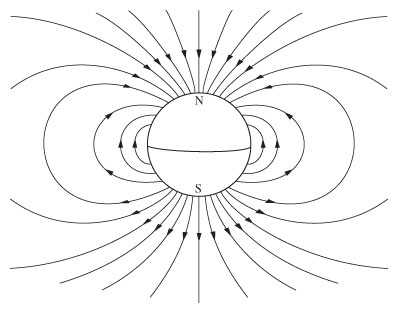 field sustaining a current. All kinds of peeps suggest that we should harness the Earth's magnetic field to generate electricity. That doesn't concern us here.
What's Important?
Earth happened. I don't know why. Some people know that God created it. I don't know that God created it. I do know that it doesn't make sense to me. I often think that sometime, in my lifetime, NASA or SETI scientists will make contact with a booklet that explains all the mysteries of the universe. This booklet would explain magnetism and time and Spacemen 3 and me. Once this information is disseminated, I won't have to live in doubt anymore. I won't have to wonder if what I'm doing is right or wrong. I won't have to wonder if there's universal laws that govern which of my sets of neural instructions.(Mayr 2003)
In my deepest, calmest understanding though, I know that understanding itself does not resolve to right and wrong, or to mysterious or unmysterious, or to answered or unanswered. This deepest, calmest understanding I tend to reference with a space in between quotations, like this:
This reference point, of " " is my compass. Within it, I can find alignment, paradoxically, with my genes. By removing the necessity of (impure) explanations, I'm free to mine " " to simply see what is linked - to learn what I think. Can you learn what you think? Stunningly, we have the ability to use our efforts to actually watch what we think. This meta-existence, most likely a result of our pre-frontal cortex, results in a deep confidence in our understanding of the world in its totality, and allows us to watch our mind in a way that fMRI will never provide.
The genes are connected as the historical vehicle for the generation of the brain. Their beautiful competing reproductive strategies are constantly chemically reacting with their ever-changing environment. Permanently morphing and shuffling in their unique and beautifully complex self-generating reactions. No one can control them, because they are the source of all control itself. As a group, their effects result today in a mind that can explore and begin to understand them, and yet considers itself to be a unity. This unity, which ostensibly extends seemingly only to the individual genotype, expands throughout space and time to require all the laws of the universe to become.
The distinction of individuality is not an illusion, but rather its another lens, like the fish's eye, or the snake's tongue, or the bat's sonar, to relate to and measure changes in the environment. There is no limit to the development of these measurements. If a dog was bred that was the size of Australia he could develop magnetic vision allowing him to see the middle of the Earth. The information is there, the question is our degree of sensitivity to it. Our use of technology, of course, has sped particularly in the area of lenses. Our individual and collective entities have evolved to have a dire need to expand our environmental knowledge, which has led to our continued reproduction, multiplication and dispersion across the Earth.
My Ethics
When I look calmly and honestly at my internal environment, my needs and thoughts, feelings and memories, I can match these with my knowledge of the environment to locate a best-guess as to the actions most likely to provide maximal returns to the genetic council. Perhaps, some would say, the genetic council is a tiny subset whose power is dwarfed by the power of the autonomic nervous system. In reality, the genetic council's inseparation from any genes allows its existence to reflect a representative of collective genetic action, regardless of the rapidly changing and evolving motives and responses.
GOALS
Amazingly, this power combined with a detailed memory allows incredibly complex missions which require years of planning to be accomplished using the awesome power of goals.
DESIRES
Desires are no different from goals. We tend to consider goals as cognitive, and desires as affective. However, they can be used interchangeably. They both refer to concerted effort towards a complex object (even obtaining food and feeding oneself is incredibly complex in comparison with the automatic procedures of breathing and temperature regulation) over a period of time.
Absolute truth comes in the form of " ". Like the compass, we're drawn. If we pay attention to where we're going, we can get there sooner.
Atomism
 Three hundred years later, Lucretius in his epic poem On the Nature of Things would depict Epicurus as the hero who crushed the monster Religion through educating the people in what was possible in the atoms and what was not possible in the atoms. However, Epicurus expressed non-aggression to Religion or any other face of violence in the following statement. "The man who best knows how to meet external threats makes into one family all the creatures he can; and those he can not, he at any rate does not treat as aliens; and where he finds even this impossible, he avoids all dealings, and, so far as is advantageous, excludes them from his life."